


Industrial IIoT Platforms vs Vertical ML: Making the Right Choice for Manufacturing
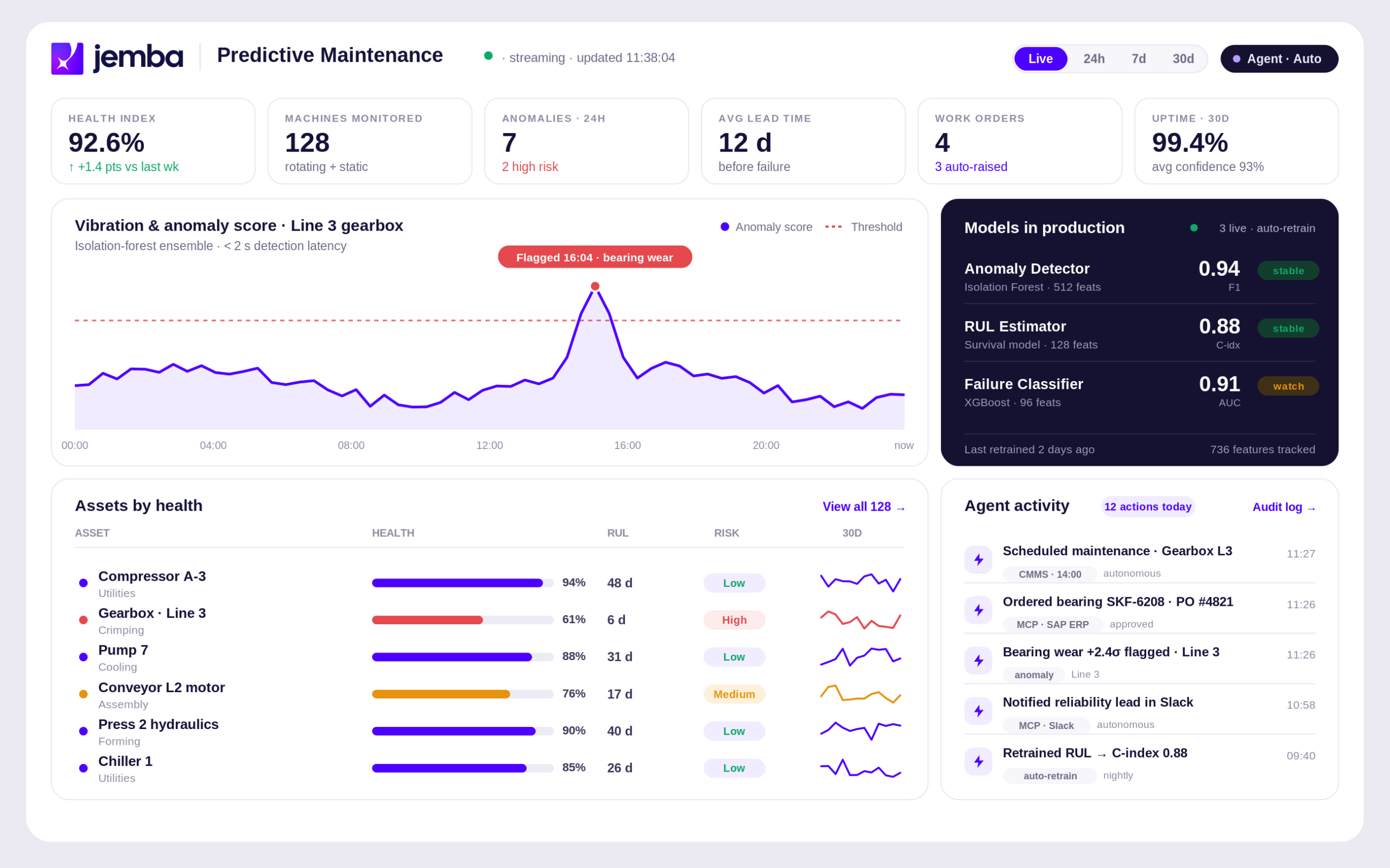
Industrial IIoT Platform vs ML Vertical: Making the Right Choice for Manufacturing
The choice between an industrial iiot platform vs ml vertical application is one of the most consequential architectural decisions facing manufacturing leaders investing in modern industrial software. The two paradigms are often conflated in marketing materials and vendor pitches, but they occupy fundamentally different positions in the industrial technology stack — and recognizing this distinction is critical to avoiding the most common deployment failures.
This article clarifies the strategic difference between the two categories, explains when each is appropriate, and provides a structured framework for choosing the right approach — or the right combination — for your specific manufacturing context.
What is an industrial IIoT platform
An industrial IIoT (Industrial Internet of Things) platform is purpose-built infrastructure for connecting, orchestrating and contextualizing data from industrial sources: PLCs, sensors, historians, MES, SCADA, IoT gateways. Leading examples include Litmus Automation, Cognite Data Fusion, PTC ThingWorx, Hitachi Lumada, Bosch IoT Suite, AVEVA Insight and others.
The 5 defining characteristics
- Industrial data ingestion and orchestration — protocol translation, time-series alignment, multi-source integration across distributed sites and assets
- Edge computing capabilities — processing closer to the data source for latency, bandwidth or sovereignty reasons
- Data contextualization — adding semantic meaning to raw data through tag taxonomies, asset hierarchies, or knowledge graphs
- Application platform foundation — providing the foundation on which various applications (dashboards, ML, digital twins, work orders) can be built
- Enterprise-grade scalability — designed to handle large-scale deployments across multiple sites with substantial data volumes
IIoT platforms address a real and important need: industrial data is fragmented across diverse systems, protocols and formats, and unifying it is genuinely difficult work that benefits from specialized infrastructure.
What is a vertical ML platform for manufacturing
A vertical ML platform for manufacturing is purpose-built ML software for specific industrial use cases. It comes pre-loaded with the algorithms, integrations, models and workflows that manufacturers need for production-grade machine learning — quality root cause analysis, predictive maintenance, yield optimization, energy management, OEE improvement.
The 5 defining characteristics
- Pre-built industrial ML modules — ready-to-deploy use cases that require configuration rather than custom development
- Native industrial connectors — plug-and-play integration with historians, MES, SCADA, LIMS and IoT platforms
- Specialized ML algorithms — handling of irregular sampling, sensor drift, missing data, regime transitions, multi-variable correlations specific to manufacturing
- Business-language output — recommendations and alerts in operator-friendly terms, not statistical scores requiring data scientist interpretation
- Operational deployment focus — designed for shop-floor adoption with measurable ROI in months, not years
JEMBA, developed by TEEPTRAK with 360+ deployments across 30 countries, is the leading European example of a vertical ML platform manufacturing today.
The fundamental distinction: data layer versus application layer
The clearest way to understand the industrial iiot platform vs ml comparison is to recognize that they occupy different layers of the industrial technology stack:
- IIoT platforms = data layer — they orchestrate, contextualize and deliver industrial data to downstream consumers
- Vertical ML platforms = application layer — they consume industrial data and deliver production-grade ML outcomes
This is not just a semantic distinction. It has profound implications for how each platform is deployed, who operates it, what skills are required, and what outcomes can be expected.
The implication for manufacturing leaders
Choosing between an IIoT platform and a vertical ML platform is not “which is better.” It is “which problem am I solving.” If your problem is data fragmentation across distributed sources, an IIoT platform addresses that need. If your problem is delivering production-grade ML outcomes on quality, maintenance, energy or yield, a vertical ML platform is the right answer. These are different problems, and they often coexist within the same organization.
The 8 dimensions to compare across industrial iiot platform vs ml
Dimension 1: Primary value delivered
IIoT platform: Unified data layer connecting fragmented industrial sources, enabling downstream applications.
Vertical ML platform: Production-grade ML outcomes on standard manufacturing use cases, measurable in ROI terms.
Dimension 2: Time-to-value
IIoT platform: 6 to 18 months typically, depending on scope and SI engagement.
Vertical ML platform: 4 weeks to first insights, 8 to 12 weeks to full deployment.
Dimension 3: Internal team requirements
IIoT platform: Internal IT, OT and integration resources, often supplemented by SI partners for application development.
Vertical ML platform: Zero data scientists required, operated by existing production, quality and maintenance teams.
Dimension 4: ML capabilities depth
IIoT platform: Provides infrastructure for ML applications, but the ML models themselves must be built by the customer or SI.
Vertical ML platform: Pre-built ML modules with measured performance metrics (99.7 percent detection rate across JEMBA deployments).
Dimension 5: 3-year total cost of ownership
IIoT platform: Platform licensing + integration services + custom application development + ongoing operation. Often 2 to 6 million euros for enterprise-scale deployments.
Vertical ML platform: Per-site subscription that includes platform, support and ongoing model maintenance. Predictable and capped.
Dimension 6: Risk profile
IIoT platform: Higher execution risk for custom ML applications, dependent on internal team or SI quality.
Vertical ML platform: Lower execution risk with standardized deployment methodology validated across hundreds of sites.
Dimension 7: Flexibility for unique use cases
IIoT platform: Maximum flexibility — any application can be built on top, given sufficient time, talent and budget.
Vertical ML platform: Optimized for the standard 90 percent of manufacturing use cases. Unique cases may require extensions.
Dimension 8: Operational adoption
IIoT platform: Adoption depends on the applications built on top — variable quality and shop-floor friendliness.
Vertical ML platform: Designed from day one for shop-floor adoption, with business-language outputs and operator-friendly workflows.
Explore how JEMBA addresses these dimensions in detail on the JEMBA platform page.
When to choose an industrial IIoT platform
An IIoT platform is the right choice when:
- Your primary problem is industrial data fragmentation — across distributed sites, diverse protocols, multiple legacy systems
- You operate widely distributed assets — telecommunications, energy infrastructure, oil and gas, multi-site manufacturing
- You need a unified data foundation for multiple downstream applications, not only ML
- You have strong internal IT and OT capabilities or established SI partner relationships for custom application development
- You have a long deployment horizon — 12+ months and patient capital
When to choose a vertical ML platform
A vertical ML platform is the right choice when:
- Your priority is production-grade ML outcomes on standard manufacturing use cases: quality, maintenance, energy, yield, OEE
- You need fast time-to-value — ROI measurable within 6 months
- You do not have or cannot easily hire 5+ industrial data scientists
- You want predictable subscription pricing rather than open-ended platform plus consulting engagements
- You prioritize shop-floor adoption with operator-friendly interfaces and business-language outputs
The hybrid approach: combining both for maximum value
The most sophisticated manufacturing organizations increasingly recognize that industrial iiot platform vs ml is not an either-or choice. Both platforms can coexist, with each playing to its architectural strengths.
Typical hybrid architecture
- IIoT platform layer — handles industrial data orchestration across distributed sites, protocol translation, contextualization, edge computing
- Vertical ML platform layer — consumes harmonized data from the IIoT layer and delivers production-grade ML outcomes via pre-built modules
- Integration — IIoT layer feeds JEMBA, JEMBA delivers ML insights back to operational workflows through the IIoT layer’s downstream integrations
This hybrid approach captures the data orchestration breadth of IIoT platforms alongside the production-grade ML depth of vertical platforms. It avoids the common pitfalls of trying to use either category for the wrong problem.
The flagship case: vertical ML delivering 2 million euros in year 1
The clearest demonstration of vertical ML value comes from JEMBA’s flagship automotive deployment. A French Tier 1 automotive supplier operating 12 production lines had stagnant yield at 30 percent despite substantial investment in industrial data infrastructure over previous years.
Results within 6 months of JEMBA deployment
- 700 process variables analyzed simultaneously across 12 lines
- 10 critical parameters identified, explaining 83 percent of yield losses
- 4 actionable levers validated by shop-floor teams
- Yield improvement from 30 percent to 80 percent on the pilot line
- Over 2 million euros saved in year 1
- Pay-back of 4 months on the JEMBA investment
- Zero data scientists hired by the customer
We saved more than two million euros in year one — with zero data scientists in-house. JEMBA revealed combinations of parameters our best process engineers had been looking for over three years.
— VP of Operations, Tier 1 Automotive Supplier, France
This level of focused ML outcome would have required substantial additional development on top of any IIoT platform deployment. The vertical platform delivered it out of the box. See more examples in our industrial case studies.
A practical decision framework for manufacturing leaders
The cleanest decision framework follows five questions, asked in order:
Question 1: What problem am I solving primarily?
If data fragmentation across distributed sources, lean toward IIoT platform. If production-grade ML outcomes on quality, maintenance, energy or yield, lean toward vertical ML platform.
Question 2: What is my time-to-value target?
If under 12 months, vertical ML platforms are essentially the only realistic option. If 18+ months are acceptable, IIoT platform with custom ML becomes feasible.
Question 3: What is my internal team situation?
If you cannot easily hire 5+ industrial data scientists, vertical ML platforms are the only viable path for production-grade ML.
Question 4: What is my data architecture maturity?
If you already have unified industrial data through existing historians or data lakes, you may not need an additional IIoT platform layer — a vertical ML platform can connect directly. If your data is fragmented, an IIoT layer may be the necessary foundation.
Question 5: Do I need both?
For complex, distributed, multi-source environments with serious ML ambitions, the hybrid approach often delivers the most value. Recognize that this is not a single decision but an architectural design.
The 4 most common mistakes in the industrial iiot platform vs ml choice
- Assuming one category replaces the other — they address different problems. Comparing them as alternatives often leads to inappropriate choices.
- Buying IIoT platform expecting production-grade ML — IIoT platforms provide infrastructure, not ready-to-use ML applications. The ML must still be built.
- Buying vertical ML platform without considering data foundation — if your industrial data is severely fragmented, the ML platform may struggle to ingest it cleanly.
- Ignoring shop-floor adoption — both categories succeed only if operational teams actually use the outputs. Test adoption explicitly during evaluation, not after deployment.
Conclusion: the strategic clarity of recognizing the layers
The industrial iiot platform vs ml distinction matters because it shapes how manufacturing leaders should think about their industrial software strategy. IIoT platforms are powerful infrastructure for industrial data orchestration. Vertical ML platforms are purpose-built applications for production-grade ML outcomes. They are not competitors — they are complements in the modern industrial software stack.
For manufacturers seeking fast, measurable ML outcomes on standard manufacturing use cases — quality, maintenance, energy, yield, OEE — a vertical ML platform like JEMBA delivers dramatically faster value with lower risk and predictable cost. With 360+ deployments across 30 countries, 99.7 percent ML detection rate, 4-week time-to-first-insight and 2.7x average year-1 ROI, JEMBA has established the European reference for vertical industrial ML in 2026.
To evaluate JEMBA on your specific use cases, the best starting point remains a personalized demo on real production data.
See Jemba on your own data
A 30-minute session with a product specialist. No data scientist required, 48-hour setup.


